
Data
Legacy Data
Legacy data silos form when information gets trapped inside isolated applications, departments, or aging technology — unable to move freely across the business. Decades of organic growth, uncoordinated tool adoption, and rigid legacy architecture (vintage mainframes, closed relational databases, discontinued desktop platforms) leave organizations unable to form one unified view of their operations, customers, or assets. The data usually isn't gone. It's just locked somewhere nobody wants to go looking.The AI and Analytics Bottleneck
Predictive analytics, agentic AI, and LLM deployments all depend on data that's cross-functional, clean, and rich with context. Legacy silos starve them of exactly that. When core business logic is locked away in decades-old formats, AI models underperform, hallucinate from missing context, or simply fail to operationalize across the last mile of daily business use.Escalating Technical Debt
Maintaining legacy environments consumes a disproportionate share of the IT budget — routine upkeep, custom point-to-point integration scripts, and manual reconciliation eat resources that should fund innovation instead. Every isolated data store compounds the debt, making the next integration more fragile and more expensive than the last.Operational Friction and "Blind" Decision-Making
Fragmented data forces leaders to decide on partial truths or stale reports. A simple cross-departmental request can mean weeks of manual extraction and reconciliation — slow enough to stall go-to-market plans and blunt customer responsiveness.Governance, Compliance and Risk Exposure
Enforcing consistent governance, lineage, and security across a fragmented legacy landscape is exceptionally hard. Disconnected systems raise the risk of data drift, shadow reporting, and non-compliance with regulations like GDPR and CCPA, simply because nobody can reliably say where sensitive data lives or who's touched it.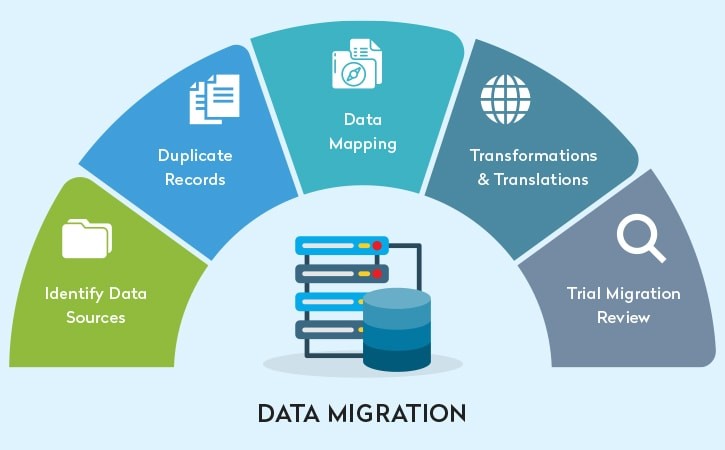
Legacy Platforms We Regularly Migrate
We've moved data out of mainframe and legacy environments including DB2, IDMS, VSAM, Sybase, Visual FoxPro, Informix, Adabas, and COBOL/CICS-based applications — along with the discontinued desktop and departmental databases (dBase, Btrieve, and similar) that tend to accumulate in finance, operations, and back-office teams over the years.How We Help
AI-Driven Migration
AI-assisted code and schema analysis auto-maps legacy structures to their modern equivalents, while auto-provisioned, elastic infrastructure flexes with demand — so migration spikes become non-events and trial runs stay low-cost and low-risk.
Governance Guardrails
Lineage, quality, catalog, and lifecycle policy are written to every asset as it arrives — not bolted on afterward — so audits and information security reviews don't turn into manual chase-downs.
Cost Optimization
Legacy infrastructure and licenses get sunset, compute gets right-sized, and data movement gets streamlined — freeing budget that was funding upkeep so it can fund innovation instead.
Case Study: Sybase ASE to SQL Server Migration
What actually goes wrong migrating off Sybase — schema mapping, stored procedure syntax, performance retuning, data integrity, and the shrinking Sybase talent pool — and how we plan around each one.
White Paper: Modernizing Legacy Data Architectures with Cloud Solutions
A closer look at why legacy systems quietly consume 60–80% of IT budgets, how to choose between rehosting, replatforming, refactoring and replacing, and where these projects most often go wrong.
Data Management
Most "data problems" people complain about are actually plumbing problems — a database that was never tuned, an integration job that silently fails on Tuesdays, a warehouse nobody's cleaned up since last year. None of it is glamorous, and all of it determines whether the rest of your data and AI investments hold up. Once data is off legacy platforms, this is the plumbing we run so it stays invisible, in the good way.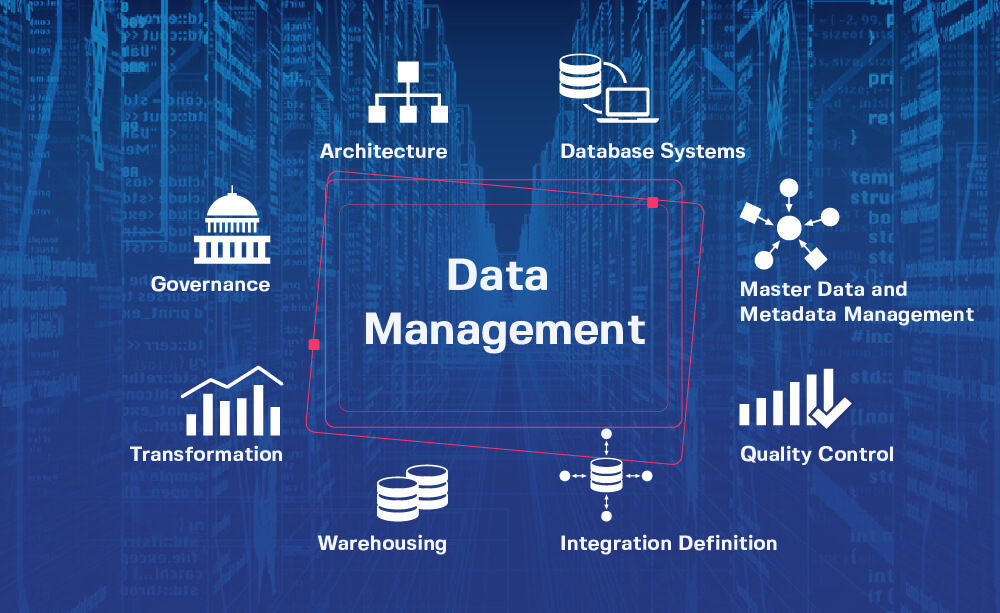
End-to-End Database Services
Setup, installation, configuration, upgrades and performance tuning across your database estate, so systems stay fast and stable as they age rather than degrading quietly.Data Integration & ETL
We consolidate data from scattered sources into a unified, accurate repository, building ETL/ELT processes that keep information consistent across every system that touches it.Database Monitoring, Maintenance & Managed Services
24/7 monitoring, backup and recovery, and proactive maintenance that catches a failing disk or a runaway query before it becomes a 2am phone call.Data Storage & Structuring
Centralized, cleaned and properly structured warehousing that turns "we have a lot of data somewhere" into "we know exactly where our data is and can trust it."Data Readiness for AI
Circling back to the AI and analytics bottleneck we opened with: models don't fail because the algorithms are wrong. They fail because the data feeding them isn't ready — ungoverned, poorly cataloged, or impossible to trust at the level AI decisions demand. Data governance used to be the department that said no. Today it's the reason AI initiatives get funded instead of stuck in review, because a model built on data nobody can vouch for isn't an asset, it's a liability waiting for an audit.Governance Maturity Assessment
We benchmark where your governance actually stands today — not where the policy documents say it stands — and build a scalable, prioritized roadmap to close the gaps that matter most.Data Catalog & Lineage for AI Context
Centralized cataloging with metadata-driven search and full lineage visibility, so a model — or the person accountable for it — can always trace an answer back to its source.Data Protection, Security & Compliance
Encryption, anonymization, masking, role-based access and real-time threat detection, aligned to the regulatory standards your industry actually gets audited against.Data Quality & Observability
Automated cleansing and validation plus continuous monitoring of data health, so quality issues get caught as anomalies, not discovered three prompts downstream.From Governed Data to Production AI
Clean, secure, well-governed, well-cataloged data is what separates an AI pilot that works in a demo from one your compliance team will actually let you put into production.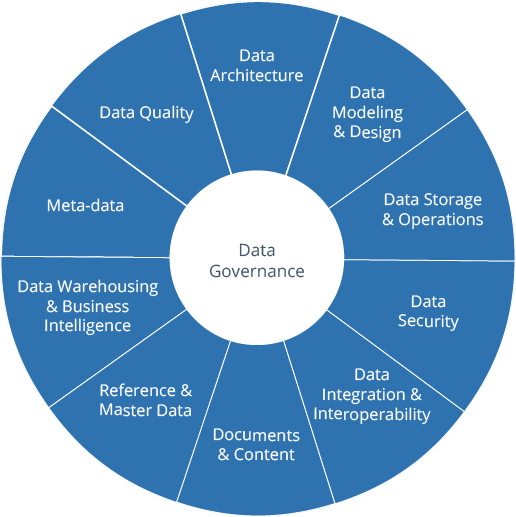
Why Choose Us
Mainframe-Literate, AI-Assisted
Real experience with DB2, IDMS, VSAM, Sybase and other legacy platforms, paired with AI-assisted migration tooling.
Day-to-Day Reliability
24/7 monitoring and managed services mean small issues get fixed before they become outages.
Built AI-Ready From Day One
Governance guardrails go in during migration, not after — so the data is ready for AI the moment it lands.